"Let Me Check and Call You Back" Is Where New Patients Go
A new patient who calls ready to book is at peak intent. Every hour between that call and a verified answer is an hour for them to call the next office on the list.
The most expensive sentence at the front desk
A new patient calls. They found the practice, liked the reviews, and picked up the phone. They ask the question almost every new patient asks: "Do you take my insurance?"
The answer at most offices is some version of "Let me check on that and give you a call back."
It is a reasonable answer. Verifying a plan properly takes time, and nobody wants to promise coverage they have not confirmed. But from the patient's side, the call just ended without an appointment. They are still holding the phone, and the next practice on the list is one tap away.
Intent has a half-life
A patient who calls to book is at the peak of their intent. They have decided they need care, set aside the time to call, and are ready to commit.
That intent fades quickly. A callback that comes three hours later reaches a patient who is back at work, in a meeting, or who has already booked somewhere that answered the question on the first call. Voicemail tag starts. Some of those patients call back. Many do not.
The practice paid for that phone call through marketing, reviews, and referrals. The callback is where a meaningful share of that spend quietly leaks out.
Why verification happens later
Nobody designed the callback on purpose. It is a symptom of how verification usually works.
Manual verification means logging into a carrier portal, finding the subscriber, and reading through benefits while the patient waits in silence. That can take ten minutes or more on a good day, longer on a bad portal. It is not realistic to do while someone is on hold, and it is not realistic when the next line is already ringing.
So verification gets batched. Calls get logged, callbacks get queued, and the verifier works through the list when there is a gap in the schedule. The work gets done. The momentum does not survive it.
What changes when the answer comes during the call
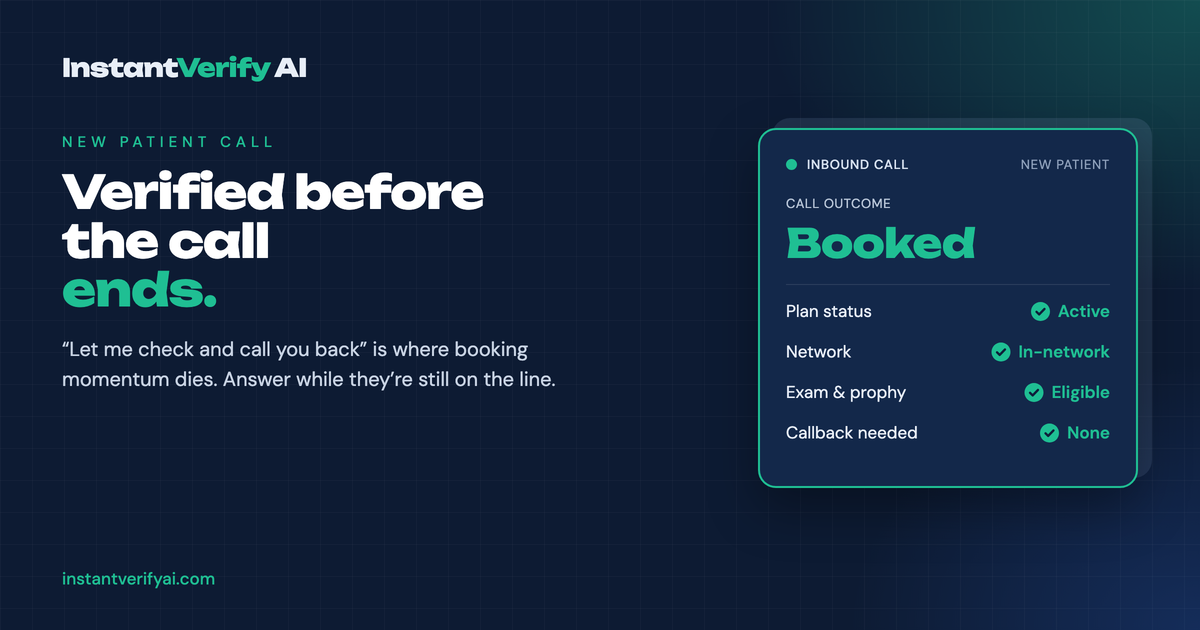
When verification is fast enough to run while the patient is still talking to the front desk, the call ends differently. The team member can confirm the plan is active, confirm the practice's network status with that carrier, and give the patient a clear picture of what their first visit will involve. Then they book the appointment before hanging up.
The patient hears a confident answer instead of a promise. The appointment goes on the schedule instead of a callback list. And the team member does not have to chase a patient who has already moved on.
Just as important, the verification that booked the appointment is the same verification the practice uses on the day of the visit. There is no second pass, and no chance that the coverage the patient heard on the phone differs from what the office sees when they arrive.
Measure the callbacks
Most practices track new patient calls. Fewer track what happens to the calls that end with "we'll call you back."
It is worth a look. Count the new patient calls in a month that ended without a booked appointment because of an insurance question, then count how many of those patients eventually booked. The gap between those two numbers is what batch verification costs.
For many offices, closing that gap is worth more than the next marketing campaign. The patients are already calling. The job is to book them while they are still on the line.
InstantVerify AI helps dental practices automate insurance verification, eliminate missed fields, and deliver confident benefit estimates every day. Learn more →