The Downgrade Trap: Why the Plan Pays for a Procedure You Didn't Do
The alternate benefit clause pays for the least expensive treatment the plan considers acceptable — not the one the doctor recommended. Unless you read for it before you quote, the patient pays the difference.

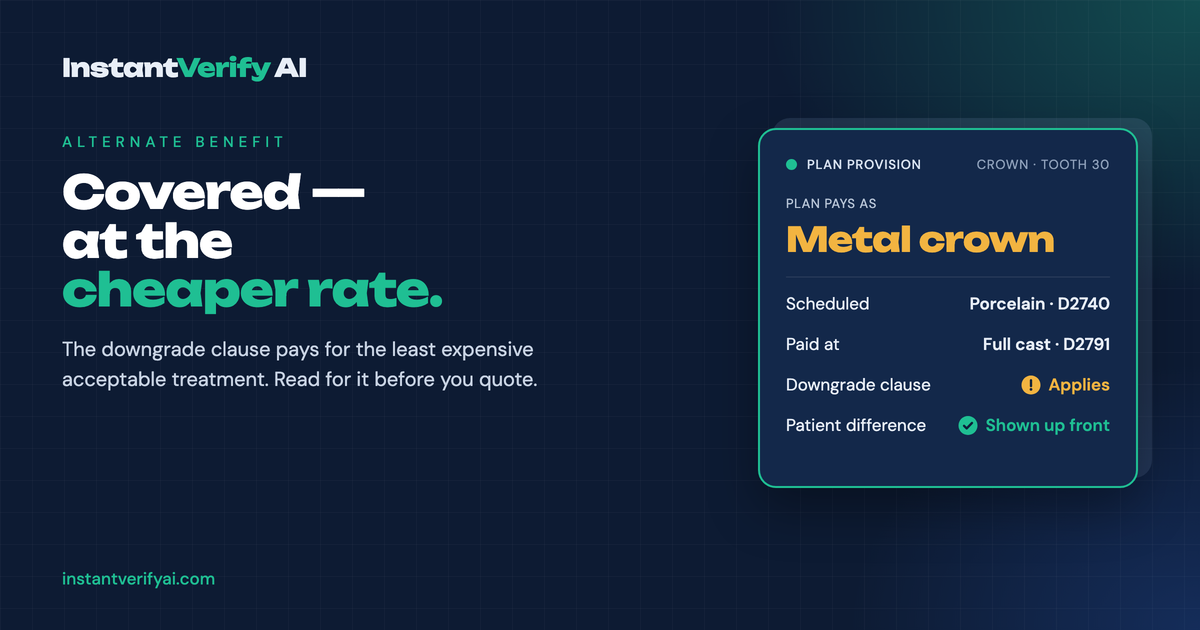
The clause that rewrites the estimate
A patient needs a tooth-colored filling on a lower molar. The plan covers basic restorative at 80%. The estimate goes out at 80% of the composite fee, the patient agrees, and the work gets done.
Then the EOB arrives. The plan paid 80% — of the amalgam fee. The difference between the two fees lands on the patient, who was told something else in the chair.
Nothing about that estimate was careless. The coverage percentage was right. The deductible was right. What was missing was one provision: the alternate benefit clause, better known as the downgrade.
What a downgrade actually does
An alternate benefit clause tells the carrier to pay for the least expensive treatment it considers professionally acceptable, not the treatment that was performed. The procedure is still covered. It is just covered as if it were something cheaper.
The common versions are familiar to anyone who has worked a front desk:
- Posterior composites paid at the amalgam rate. The most frequent downgrade, and the easiest to miss on a routine filling.
- Porcelain or ceramic crowns on molars paid at the full-cast metal rate. The patient gets the crown the doctor recommended. The plan pays for the one it prefers.
- Implants or bridges paid toward a removable partial. The largest gaps, on the cases where the patient is already making a big decision.
In each case the verification answer to "is this covered?" is yes. That is exactly why the downgrade does so much damage. It hides behind a correct answer.
Why it gets missed
Downgrade provisions rarely sit next to the coverage percentages. They live in plan limitations, in procedure-level notes, or in a provisions section a few clicks deeper in the portal. On a manual verification, under time pressure, that section is the first one skipped.
EDI eligibility responses usually do not carry them at all. A clean electronic check can come back with every percentage filled in and no hint that the composite will be paid as an amalgam.
So the estimate is built on the right numbers applied to the wrong procedure. Nobody finds out until the claim is paid.
What catching it before the quote looks like
The fix is not complicated. It is a matter of reading for the clause when the procedure calls for it.
For a scheduled posterior composite, the verification needs to answer one extra question: does this plan downgrade posterior composites? For a molar crown, the question is whether the plan pays porcelain at the metal rate. For an implant, whether the plan applies an alternate benefit toward a partial.
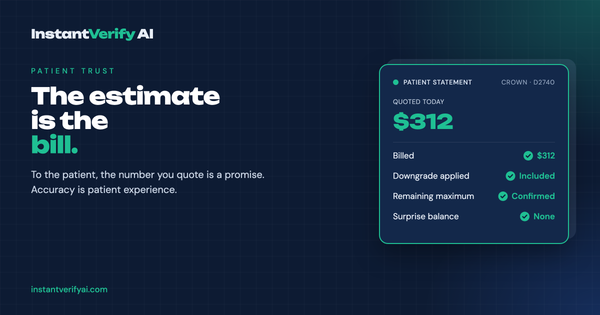
When the answer is yes, the estimate changes. The office quotes the plan's payment at the downgraded rate and shows the patient the difference up front. The patient can still choose the composite or the porcelain crown, and most do. They choose it knowing the number.
That is a very different conversation from the one that happens after the EOB, when the office has to explain why the estimate was wrong.
The procedure decides what to read
This is where procedure-aware verification pays off. A downgrade check does not matter for a prophy. It matters a great deal for a posterior composite, a molar crown, or an implant case.
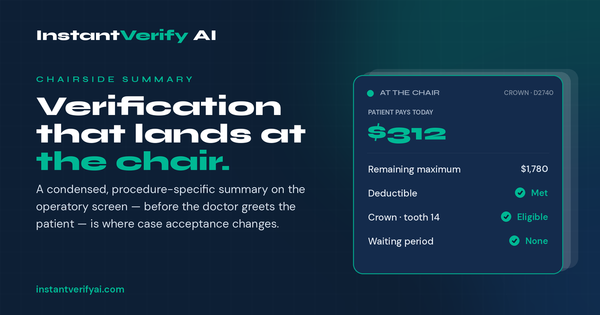
A verification that reads the scheduled procedure first knows when to look for the alternate benefit and when to skip it. The team does not have to remember which appointments need the extra step. The report either shows the downgrade or confirms there isn't one.
The downgrade will not disappear from dental plans. What can disappear is the surprise.
InstantVerify AI helps dental practices automate insurance verification, eliminate missed fields, and deliver confident benefit estimates every day. Learn more →