Dental Practice Operations
"Let Me Check and Call You Back" Is Where New Patients Go
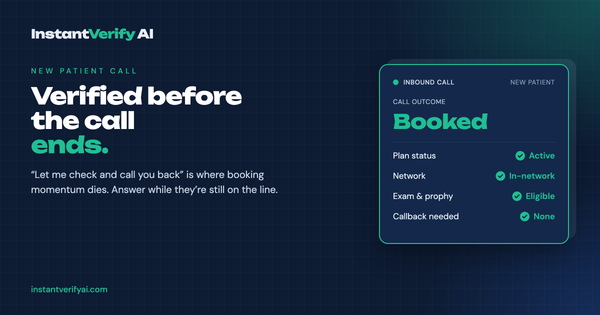
A new patient who calls ready to book is at peak intent. Every hour between that call and a verified answer is an hour for them to call the next office on the list.

Co-founder, InstantVerify AI. Building intelligent insurance verification for dental practices.

Dental Practice Operations
A new patient who calls ready to book is at peak intent. Every hour between that call and a verified answer is an hour for them to call the next office on the list.
Dental Insurance Verification
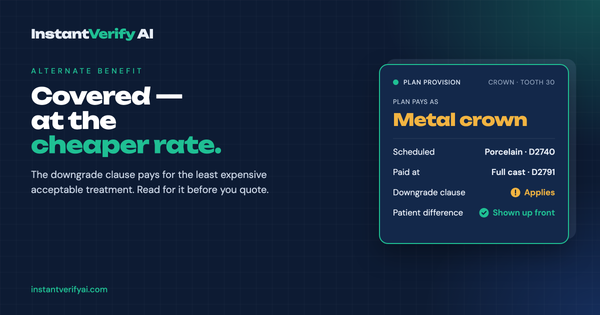
The alternate benefit clause pays for the least expensive treatment the plan considers acceptable — not the one the doctor recommended. Unless you read for it before you quote, the patient pays the difference.
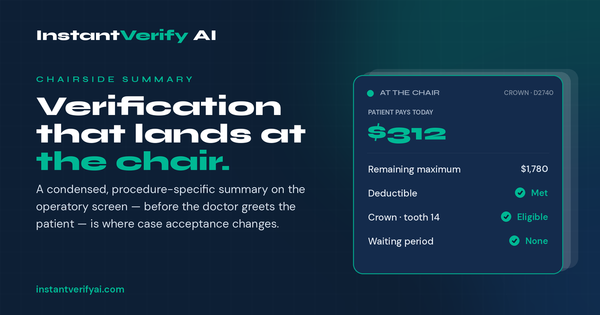
Where verification actually has to land A verification report is useful in proportion to where it ends up. A complete report that lives only on the front desk computer has limited value at the moment treatment is presented. A complete report that lives in the operatory — where the doctor and
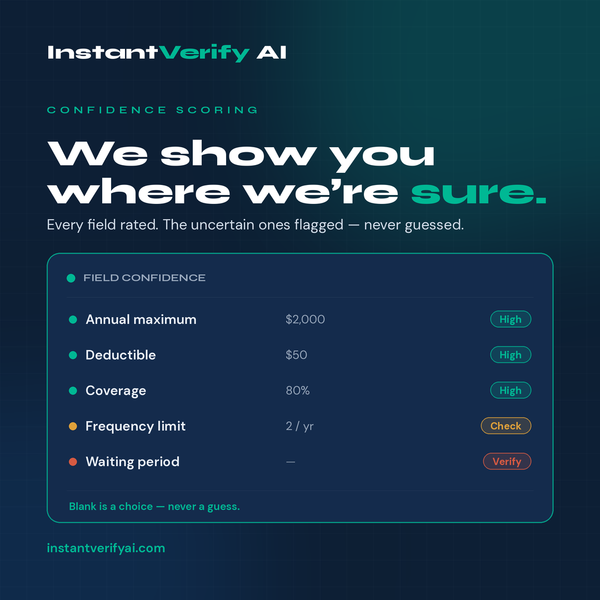
The accuracy claim that should make you skeptical Every verification vendor wants to claim high accuracy. The number sounds reassuring in a sales conversation. It implies a level of reliability that a practice can simply trust without further review. The problem with the claim is that it cannot be honestly
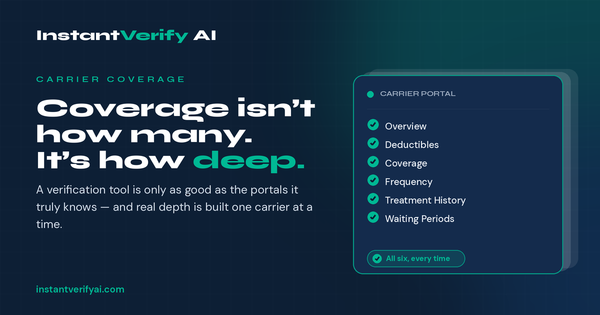
The myth of universal coverage Every verification vendor claims to support every carrier. The marketing slides show the logos. The sales calls confirm the integrations. The reality, when the system meets a portal, is more nuanced. Each carrier portal is a different system. Different login flow, different layout, different field
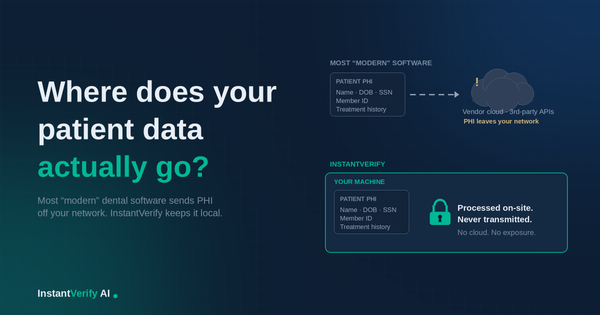
The question most evaluations skip When practice owners evaluate a verification tool, the questions are usually about accuracy, speed, and carrier coverage. The question that gets asked least often — and that matters most for the long-term safety of the practice — is: where does the patient data actually go? The
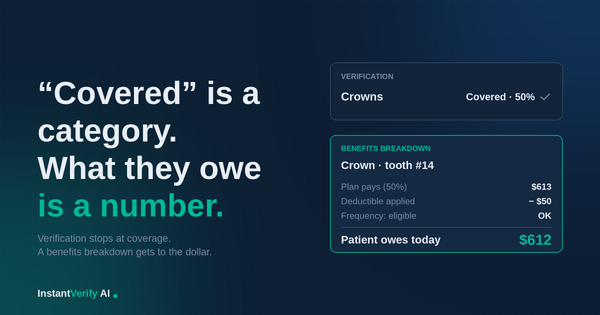
The difference that matters at presentation time When a team member presents a treatment plan to a patient, they aren't answering "is the procedure covered?" They're answering "what will I owe?" Those are different questions, and they require different data. A verification
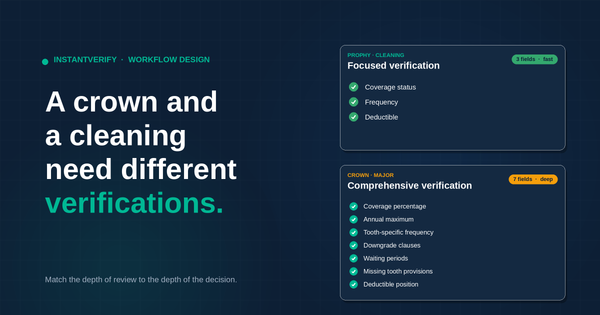
The flaw in one-size-fits-all verification Most automated verification tools treat every appointment the same way. The same fields get checked for a routine hygiene visit and a crown replacement. The same time is spent. The same report is generated. That uniformity feels thorough. In practice, it is

The hidden workload behind every appointment Before a patient sits in the chair, someone has already spent meaningful time on their behalf — navigating a portal, sitting on hold, cross-referencing benefit information, and entering it into the practice management system. That work rarely gets acknowledged because it is invisible to

The three most commonly missed fields Frequency limitations are among the most overlooked. A crown covered once every five years looks identical to a crown covered once every three years until a second claim is denied. By then, the treatment has been completed and the billing conversation with the patient

Dental Practice Operations
Insurance verification doesn't fail because staff aren't working hard enough. It fails because the process was never designed to work consistently. Here's how to redesign it.