Why a Crown Appointment and a Cleaning Need Different Verifications

The flaw in one-size-fits-all verification
Most automated verification tools treat every appointment the same way. The same fields get checked for a routine hygiene visit and a crown replacement. The same time is spent. The same report is generated.
That uniformity feels thorough. In practice, it is the opposite. The hygiene appointment is over-verified — fields the office will never use are pulled and reviewed. The crown appointment is under-verified — the fields that actually matter for that procedure are checked at the same depth as the ones that do not.
The result is a verification workflow that is both slower than it needs to be and shallower than it should be.
What a focused verification looks like
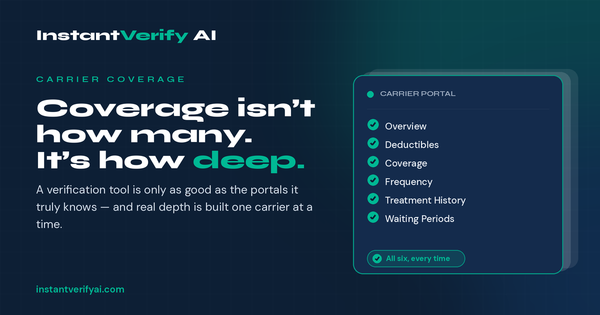
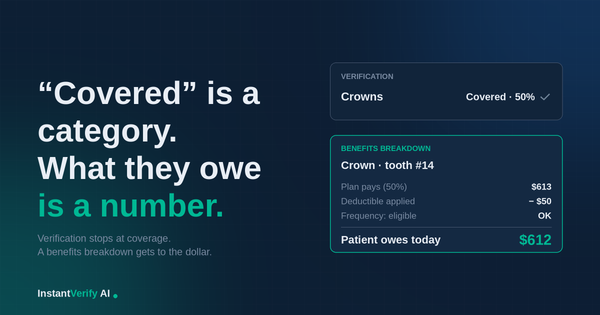
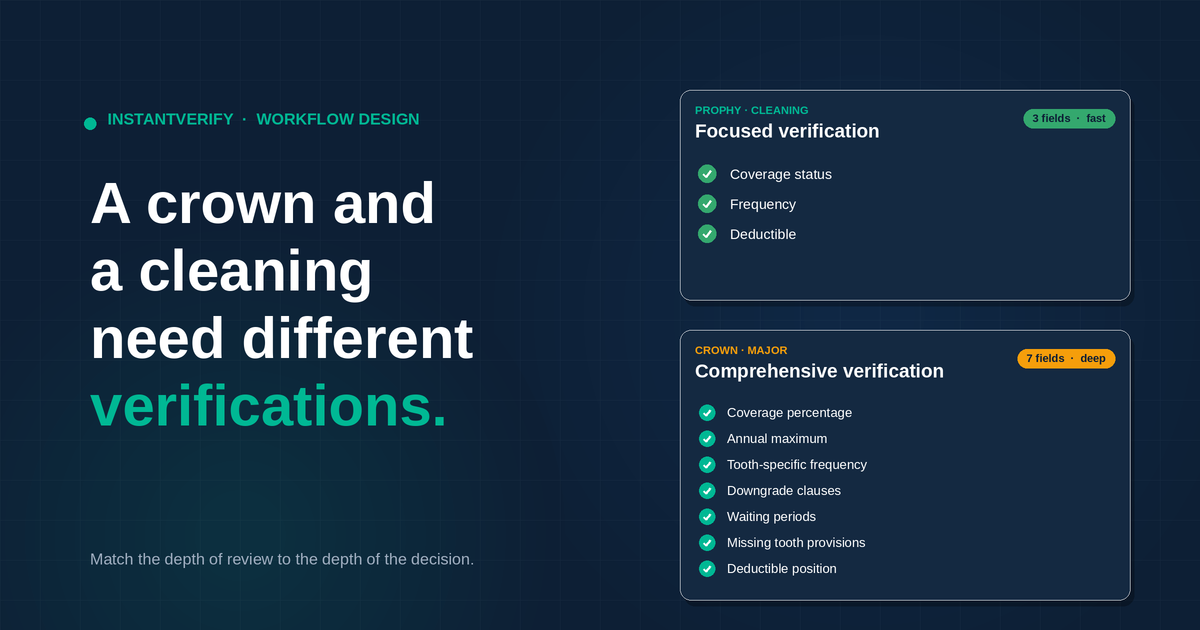
A focused verification reads the scheduled procedure first and pulls only the fields that matter for that procedure. For a prophy, that is a short, fast check — coverage status, frequency, deductible. For a crown, it is a deeper check that includes frequency history on the specific tooth, downgrade clauses, waiting periods, and missing tooth provisions.
The depth of verification matches the depth of the decision being made. A hygienist deciding whether to schedule the next cleaning does not need the same information as a doctor presenting a crown.
When the verification matches the appointment, the report is more useful at the chair — and the time spent on simpler appointments is freed for the cases that actually require more analysis.
What this changes in the schedule
Practices that use procedure-aware verification report a noticeable shift in how the front desk operates. The morning report is not a stack of identical reports — it is a prioritized view of which appointments need attention and which can move through without additional review.
The crowns, the implants, the second molars, the patients with new plans — these get flagged for closer review. The recall cleanings, the kid prophys, the routine exams — these are confirmed and ready, with no additional staff time required.
The team's attention is no longer spread evenly across appointments that need different things. It is concentrated where it actually changes the outcome.
Why automation makes this possible
Manual verification cannot easily adjust its depth by procedure. Once a team member is in a portal, the cost of pulling more fields is small relative to the cost of getting into the portal in the first place. So the depth tends to be uniform — whatever the standard checklist says, regardless of what the appointment requires.
Automated verification has a different cost profile. The system has no incremental fatigue from pulling more fields. It can verify deeply when needed and stop early when not. The variable depth is invisible to the team — they just see the report calibrated to what they need for that day's schedule.
That calibration is where focused verification stops being a feature and starts being a workflow change.
InstantVerify AI helps dental practices automate insurance verification, eliminate missed fields, and deliver confident benefit estimates every day. Learn more →