To Your Patient, the Estimate Is the Bill
The office calls it an estimate. The patient hears a promise. When the bill doesn't match, the practice loses more than the difference — it loses the patient's trust.

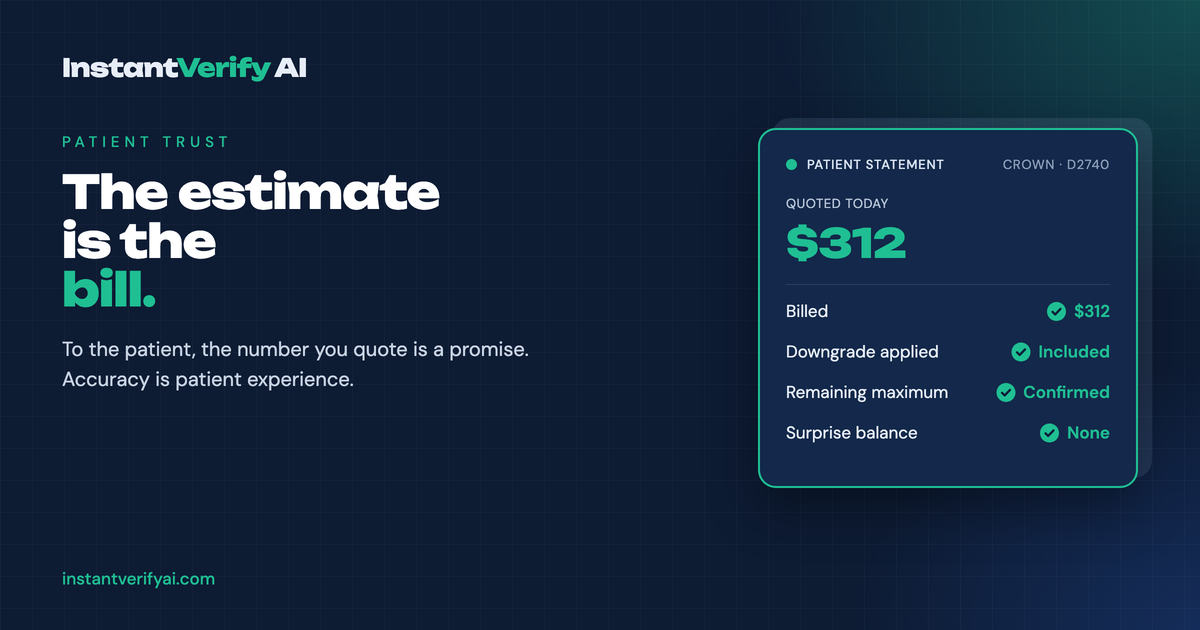
Two words for the same number
Inside the practice, the number on the treatment plan is an estimate. Everyone on the team knows what that means: the best calculation available, based on the benefits on file, subject to what the carrier actually pays.
The patient does not hear it that way. The patient hears a number, decides whether they can afford it, and agrees to treatment based on it. Whatever disclaimer is printed at the bottom of the page, the number has become a promise.
That gap in language is harmless when the bill matches. When it does not, it is the start of a very different relationship.
What a surprise balance costs
When a patient receives a statement for more than they were quoted, the practice absorbs a few costs at once.
The obvious one is money. Either the practice collects the difference and has an uncomfortable conversation, or writes it off and loses the margin.
The less visible cost is trust. A patient who was surprised once reads the next treatment plan differently. They hesitate on the recommended crown. They ask for a second opinion. They wait until next year. The doctor's recommendation has not changed, but the patient's confidence in the numbers around it has.
And then there is what the patient tells other people. A good clinical experience followed by a surprise bill rarely produces a referral. It sometimes produces a review.
Why estimates miss
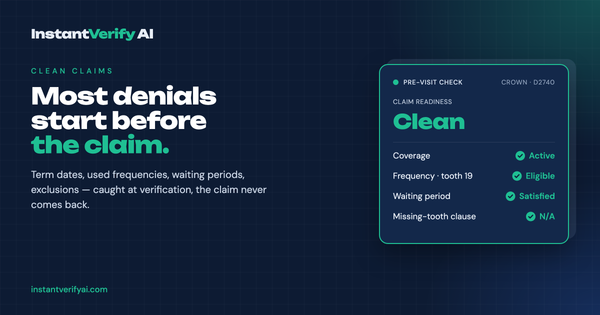
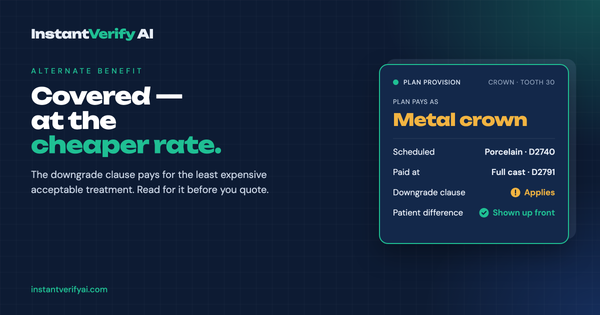
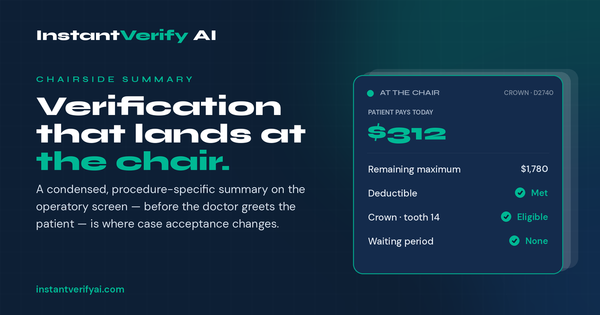
Estimates go wrong for predictable reasons. The coverage percentage was right, but a downgrade clause applied. The deductible was assumed unmet when it had been met, or the reverse. A frequency had already been used at another office. The remaining annual maximum was lower than anyone realized. A waiting period was still running on a new plan.
Each of these is a verification detail. None of them is visible on a basic eligibility check. And each one turns an honest estimate into a broken promise.
Accuracy is the patient experience
Practices invest heavily in how patients feel: the front desk greeting, the comfort of the operatory, the follow-up call after a procedure. All of it matters.
But for many patients, the most lasting impression of a visit is financial. Did the practice tell them the truth about what it would cost? A clear, accurate number before treatment, followed by a statement that matches, tells the patient the office knows what it is doing and can be trusted.
That trust is what fills the schedule. Patients who believe the numbers accept treatment more readily, come back on time, and send their families.
Quoting what you can stand behind
The goal is not to eliminate the word "estimate." Carriers make the final payment decision, and patients deserve to know that.
The goal is to make the estimate close enough to the bill that the distinction rarely comes up. That starts with verification that reads the details that actually move the number, not just the coverage percentage, and with an honest flag when something could not be confirmed.
When the quote and the bill match, the patient never has to think about the difference between an estimate and a promise. That is the experience worth delivering.
InstantVerify AI helps dental practices automate insurance verification, eliminate missed fields, and deliver confident benefit estimates every day. Learn more →